
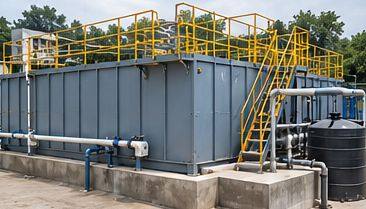
A Fluidized Bio Bed Reactor (FBBR) uses small plastic carrier media that stay in constant motion inside an aerated tank. Bacteria grow as a biofilm on the media and break down organic pollutants in the sewage.
Because the media provide a very large surface area for bacteria, an FBBR achieves high treatment capacity in a small tank, and existing plants can often be upgraded by adding media.
Key features
- Biofilm carrier media kept in suspension by aeration
- High treatment capacity per tank volume
- Compact footprint, easy to upgrade existing tanks
- Stable performance under load variations
- Low sludge generation
No products match that search.
Planning a plant?
Tell us your flow and water source. Our engineers will size it for you.