Shape

Products

  • Home
  • IET – FLUIDIZED BIO BED REACTOR (FBBR)

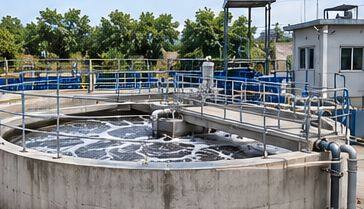
IET – Sewage & Effluent Treatment Plants (STP / ETP)

Treated wastewater is now recognized as a valuable resource. Highly treated wastewater, using advanced scientific techniques, can be reused for applications such as landscape irrigation, floor washing, toilet flushing, and partial process water recycling. This greatly reduces the burden on natural water resources.

Keeping this in view, Ionics Environmental Solution has developed pre-fabricated packaged wastewater treatment plants for sewage and grey water treatment. Space limitations in existing buildings created challenges, leading to the development of compact and lightweight treatment systems.

Innovative techniques such as high-rate clarifiers, coagulation-precipitation with special polymers, self-aerating biowheel attached-growth processes, bacterial augmentation with enzymes, and bio-media clarification have been introduced. These technologies reduce treatment volume, power consumption, and operational costs.

Detailed physical and chemical treatability studies were conducted using organic polymers and reduced inorganic chemicals for different types of sewage and grey water. Based on these studies, a complete treatment scheme has been designed.

Primary Treatment

Primary treatment aims to remove suspended solids (SS), floating debris, coarse particles, oil and grease, and to equalize flow for uniform loading. This reduces shock loading and decreases aeration power needs in later stages.

The system includes a flocculation chamber and a solid clarifier. Caustic soda, PAC, and polyelectrolyte are dosed uniformly and mixed using mechanical stirring. The solid clarifier uses parallel plate media and a hopper bottom to settle solids effectively.

Secondary Treatment

Secondary treatment biologically removes dissolved organic and inorganic compounds through microorganisms, primarily aerobic bacteria. These microorganisms convert colloidal and dissolved organic matter into gases and biomass. Since the biomass has higher density than water, it settles by gravity.

This process is achieved through an attached-growth system using a mechanical bio-processor. The aerobic condition is maintained by rotating plastic media driven by a geared motor (2.5–3.5 rpm).

The programmed death cell chamber includes floating mesh media for attached growth, with a hopper bottom. In the disinfection chamber, PAC and chlorine are added for precipitation and disinfection, mixed using a mechanical stirrer.

Tertiary Treatment

Tertiary treatment removes remaining suspended and dissolved impurities. Water from the disinfection chamber flows to the intermediate tank and is then pumped through sand and carbon filters. The filtered water is collected in the treated water sump.

Integrated Aerobic & Anaerobic System

Ionics provides integrated anaerobic and aerobic treatment systems for wastewater from dyeing and pulping industries. Anaerobic digesters require time for bacterial populations to establish, usually achieved by “seeding” using sewage sludge or cattle slurry.

The digester is filled with cattle slurry, and perforated PVC pipes ensure uniform flow of wastewater. A baffle prevents solid particles from rising, while a horizontal launder collects overflow for the aerobic stage. Biogas generated in this stage is collected and used for various applications.

This treatment plant uses combined biological processes supported by specific bacterial cultures and required chemicals for decolorization. The treated water meets all Pollution Control Board standards.

Advantages

  • Compact design
  • Odorless operation
  • Low power consumption
  • Easy maintenance
  • Quick installation
  • Minimal civil work
  • Reduced operational noise
  • Flexible for modifications
  • Negligible sludge generation